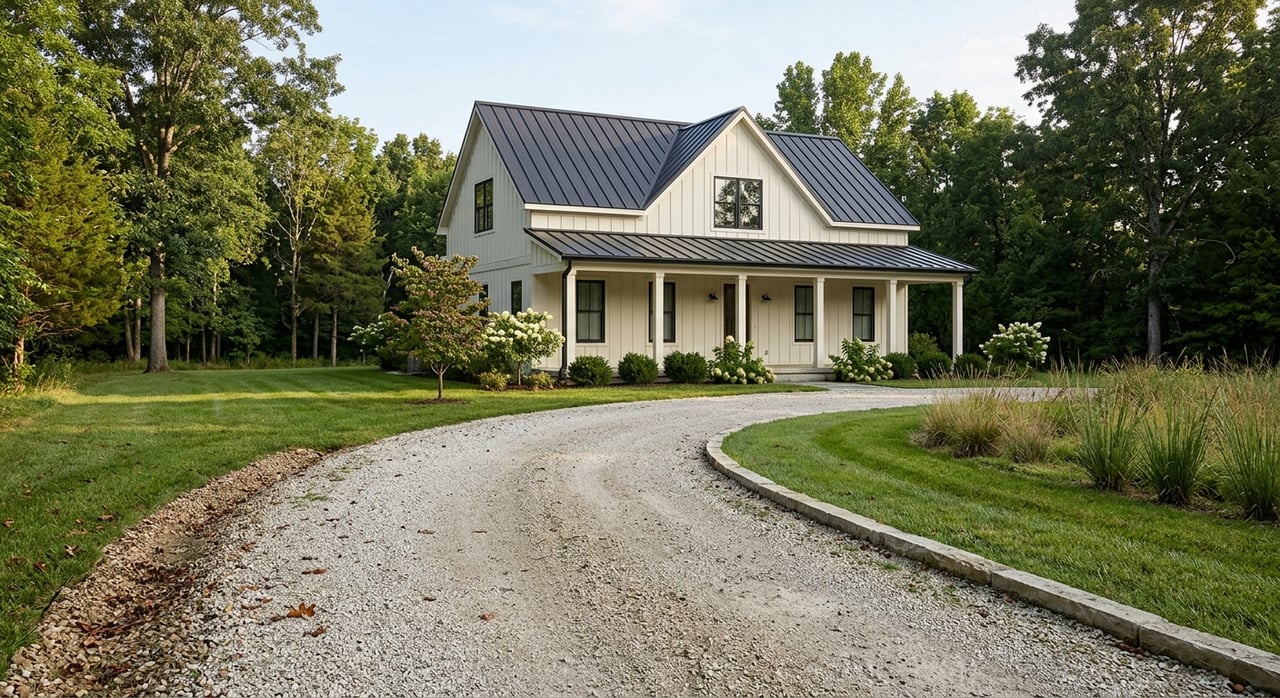
If you are considering acreage near Pea Ridge, it is easy to focus on the dream first: more space, more privacy, and room to build what fits your life. The catch is that acreage purchases usually come with more moving parts than a standard neighborhood home. If you understand access, utilities, regulations, and future growth before you buy, you can make a much more confident decision. Let’s dive in.
Acreage Near Pea Ridge Is Not One Thing
When buyers say they want acreage near Pea Ridge, they are often talking about different property types without realizing it. Some parcels are inside the city and fall into estate-style or agricultural zoning districts, while others are outside city limits in unincorporated Benton County.
Inside Pea Ridge, the zoning code includes agricultural districts, residential estate districts, and several residential density districts. The A district is described as a very low-density single-family holding zone, and the RE district is intended for large estate-type lots of at least 1 acre. That matters because a property that feels rural may still sit in an area shaped by city land-use rules.
Other city residential districts are more typical neighborhood settings. For example, R-1 generally ties to areas with public sanitary sewer available, and R-2 requires public sanitary sewer. So if you are comparing acreage-style living options, it helps to know whether you are looking at a true larger tract, a one-acre estate lot, or a larger-lot subdivision inside the city.
Outside the city limits, Benton County does not apply zoning to unincorporated land. Instead, the county regulates through subdivision rules, floodplain rules, stormwater rules, and review for some development activity. In practical terms, that means county acreage can offer more flexibility, but due diligence becomes even more important.
Access Should Be Your First Question
One of the biggest issues with acreage is not the house or even the land itself. It is access. Before you get too far into a property, you need to know exactly how you reach it and who is responsible for maintaining that route.
Benton County says its Road Department maintains only roads that are part of the County Road System. If a road is not county maintained, it may be a private road, a local access road, a city street, or a state highway. That distinction can affect your maintenance costs, daily convenience, and long-term expectations.
County subdivision rules are clear that every lot must have frontage on or be contiguous to a public road or street, or to a dedicated private drive, easement, or other approved access method. Landlocked parcels are not permitted. If the property uses shared access or a private road, the maintenance terms should be clearly spelled out in recorded documents.
For private-road developments, the county requires a maintenance disclosure stating that the road is not built to county standards and that maintenance is the responsibility of current and future owners. Shared access easements must also address maintenance, repair, drainage, and financial responsibility. That is not fine print. That is a core part of what you are buying.
Why Driveways Matter More on Acreage
On acreage, the driveway can be a real budget item. Benton County requires private driveways connecting the road and the primary structure to be hard surfaced and designed to prevent stormwater runoff onto the road.
That means the cost of ownership may include more than the purchase price and a house payment. You may also need to think about driveway construction, resurfacing, drainage work, and ongoing upkeep over time.
Utilities Can Change the Whole Deal
Utilities are often where acreage deals either make sense or get more complicated. Near Pea Ridge, some parcels may have access to public water and sewer, while others may need septic, a well, or both.
Inside Pea Ridge, subdivision rules are more infrastructure-heavy. Developers must finance local streets, drainage systems, sidewalks, water lines, and sewer lines within a development. The city also requires connection where public water and sewer are available.
Pea Ridge Water Utilities operates both a water distribution system and a wastewater collection system, with nearly 3,000 service connections in its water jurisdiction. It also states that it purchases water from Benton/Washington Regional Public Water Authority, which obtains and disinfects water from Beaver Lake. That tells you city water and sewer are real options in parts of Pea Ridge, but not something you should assume for every parcel.
If public sewer is not accessible, Pea Ridge subdivision rules require documentation from the State Health Department showing septic soil test results and confirming the septic system meets state requirements. If a public water supply is not available, the county health department may provide a letter with recommended well depth if known, or a test well may be needed to evaluate adequacy.
Arkansas Department of Health guidance also states that private well water safety is the owner’s responsibility. If you are buying a property with a private well or planning to install one, that should be part of your early due diligence, not an afterthought.
Lot Size Affects Utility Options
In Benton County conventional subdivisions, lots must be at least 1 acre with a minimum frontage of 120 feet. If both a septic system and a water well are needed, the lot must be large enough to satisfy State Health Department requirements.
This is one reason acreage is not just about privacy. In many cases, the extra land is what makes the site workable for the utility setup the property needs.
Growth Around Pea Ridge Adds Pressure
Pea Ridge is growing quickly. The city’s estimated population reached 11,233 on July 1, 2025, up from 6,559 in the 2020 census.
That kind of growth does not tell you exactly what will happen to a specific tract. It does tell you why buyers should pay close attention to roads, utilities, drainage, and surrounding development patterns before committing.
A parcel that feels quiet and tucked away today may still be affected by future development pressure, especially near growth corridors. That does not make it a bad buy. It just means you want a clear picture of what is in place now and what could change later.
Floodplain and Drainage Deserve a Close Look
Larger tracts often bring more drainage questions. Benton County administers the floodplain program for the county and requires a Floodplain Development Permit before land disturbance in FEMA special flood hazard areas.
The county’s floodplain rules can apply to grading, drilling, roadway construction, and even individual water or sewer installations within the floodplain. Inside city limits, Pea Ridge’s building department says it administers the city’s floodplain program.
For buyers, the takeaway is simple: do not assume a larger lot gives you unlimited freedom to place a house, a driveway, or future improvements wherever you want. Floodplain and drainage issues can shape where and how a property can be used.
Future Plans Should Guide Your Due Diligence
Acreage buyers often think beyond the current purchase. You may want to build later, add a shop, improve access, or potentially split land in the future.
That is where planning questions become important. Benton County’s rules show that larger parcels do not automatically mean fewer regulations, and the city has formal processes for things like rezoning, conditional use, variances, and plat review.
Pea Ridge says its Planning Commission meets on the first Tuesday of every month at City Hall, and the city provides applications for conditional use, rezoning, variances, large-scale development, and preliminary and final plats. If your plans are anything beyond simply buying and holding, you want to understand that process early.
Surveyors, Builders, and Engineers Often Enter Early
Many buyers are surprised by how soon professionals need to be involved with acreage. Surveyors are often essential early in the process because boundaries, corners, easements, and access points can affect whether a parcel fits your plans.
Pea Ridge subdivision rules require plats to include a certificate from a registered land surveyor confirming the boundary survey and monument locations. The county flood management office also works with surveyors, engineers, and developers on flood-related issues.
Once a parcel is expected to support new construction or improvements, builders and engineers may also come into the picture. Pea Ridge says building inspections are required for new construction activities, including single-family structures, remodels, additions, commercial, and industrial work, with inspections for items such as footing, foundation, framing, plumbing, mechanical systems, and fire safety.
A Simple Acreage Buying Checklist
Before you move forward on acreage near Pea Ridge, make sure you can answer these questions:
- Is the property inside Pea Ridge city limits or in unincorporated Benton County?
- What zoning district applies, if the parcel is in the city?
- Is the road public, private, city-maintained, or county-maintained?
- Are there recorded easements or private-road maintenance agreements?
- Are public water and sewer available, or will the property need septic and a well?
- If septic is needed, are soil test results available?
- If a well is needed, what do you know about water availability and testing?
- Is any part of the property in a floodplain or subject to floodplain permitting?
- What drainage or stormwater issues could affect building or access?
- If you want to build, split land, or add improvements later, what approvals might be required?
The Bottom Line on Buying Acreage Near Pea Ridge
Acreage near Pea Ridge can offer the space and flexibility many buyers want, but it usually asks more from you in return. Access, utilities, drainage, floodplain status, and future-use planning matter more here than they do in a typical in-town home purchase.
This is exactly where a detail-driven approach helps. When you ask the right questions early, you can avoid expensive surprises and focus on whether the property truly fits your goals. If you want clear guidance while you sort through land options in Pea Ridge and the surrounding Northwest Arkansas area, reach out to Cindy Carfaro.
FAQs
What types of acreage properties are common near Pea Ridge?
- Near Pea Ridge, you may find city estate lots, agricultural-zoned parcels, larger-lot subdivisions, and unincorporated Benton County tracts that are regulated more through subdivision, access, floodplain, and health rules than through zoning.
What should buyers check first on acreage near Pea Ridge?
- Buyers should first confirm legal access, road maintenance responsibility, and whether the property is served by a public road, private road, or easement.
Do acreage properties near Pea Ridge always have public water and sewer?
- No. Some properties in and around Pea Ridge may have access to public water and sewer, but others may require septic, a well, or both, depending on location and availability.
Why does road maintenance matter for acreage in Benton County?
- Benton County maintains only roads in the County Road System, so if a property is on a private road or other non-county-maintained route, owners may be responsible for maintenance and related costs.
Do buyers need to check floodplain status for land near Pea Ridge?
- Yes. Floodplain status can affect grading, roadway construction, drilling, utility work, and where future improvements may be placed on the property.
When should a buyer involve a surveyor for acreage near Pea Ridge?
- A surveyor is helpful early in the process to confirm boundaries, corners, easements, and access, especially if you plan to build or make improvements later.